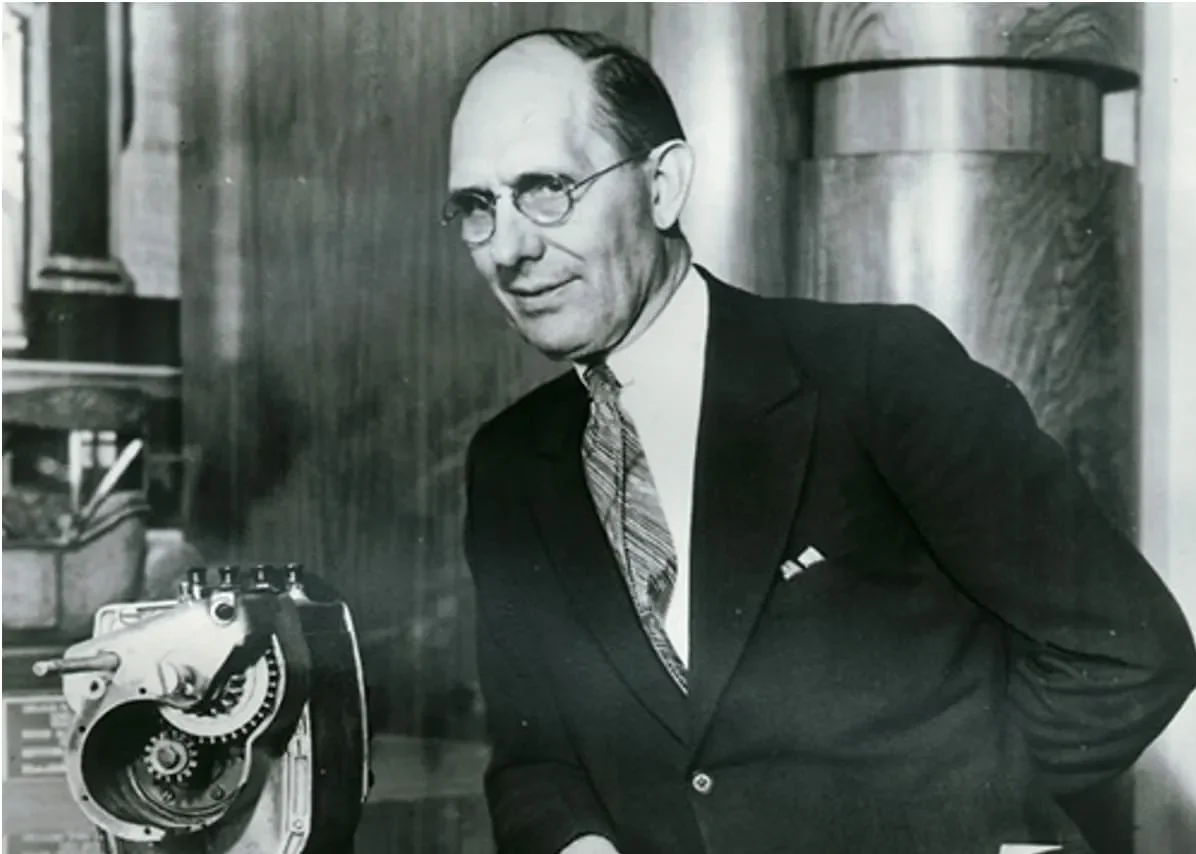
His eyesight was so bad that young Charles Franklin Kettering had to drop out of college. Yet throughout his life he could see things no one else saw. The inventions of Kettering and his researchers likely had more impact on modern American life than any other inventor outside Thomas Edison. Not really cut out to be a “corporation man,” he was nevertheless put in charge of all research and science at the world’s largest corporation for 27 years. This quirky, opinionated man earned far more than great inventors like Edison and George Westinghouse, giving much of his wealth away through generous contributions to society. We remember him today primarily through New York’s Sloan-Kettering Cancer Research Institute and the Ohio city of Kettering, named after him. Known by his employees as “Boss,” Kettering never stopped thinking about the future and how to make it better. Days before his death at 82, he was at his favorite place, a workbench in a laboratory, exploring his latest theory. This is his story.
Beginnings
Charles Kettering was born August 29, 1876, on a small farm near Loudonville, Ohio, the fourth of five children of Jacob and Martha Kettering, third-generation Americans of Alsatian and Scotch-Irish origin. He grew up doing the same farm chores as his siblings but developed an interest in things mechanical. He took apart his mother’s sewing machine and made a dress just to understand how the machine worked. When he broke his right arm, he learned how to better use his left arm and became ambidextrous. Tall, shy Charles had headaches from his chronically inflamed, myopic eyes, and all his life stooped forward to see the person or product at hand.He was a learner, reading everything he could get his hands on, especially scientific journals. He excelled in math and science, graduating at the top of his high school class in 1895.
Charles spent the next few years teaching for $250 per year (about $10,000 in 2026) and in a sense all his life he was above all else a teacher. His later business meetings were often more like lectures than discussions. In his spare time, the ever-energetic Kettering did chemical and electrical experiments at home. In 1898, he entered The Ohio State University, but his poor eyesight forced him to quit after one year. At that point, he spent two years with the Star Telephone Company, where he was assigned to a line crew, stringing wire from pole to pole. His intelligence quickly got him promoted to crew foreman, but Kettering was always connected to the people and processes he worked with, never comfortable in an office.
Life at “The Cash”
Kettering tried college again, entering Ohio State in 1901 and earning a degree in electrical engineering in 1904. At that time, engineer Edward Deeds at Dayton’s National Cash Register Company was trying to create an electric cash register to eliminate the laborious cranking required by existing registers. He hired Kettering at the spectacular salary of $2,500 per year (about $92,000 in 2026).
The following year Kettering married Olive Williams, and they had one son, Eugene, in 1908. “Gene” went on to become a highly regarded engineer himself. Olive made sure Charles got away from work to attend symphonies and the opera, but even there the man kept scribbling away notes and patent sketches on the technical problems that were foremost in his mind.
For the next five years, Charles worked away at “The Cash,” run by the dictatorial and mercurial John H. Patterson. Patterson is famous for his creation of modern sales methods, including standard pitches, sales quotas for salesmen, and enthusiastic sales conferences with slogans and songs. Among those trained in this sales environment was Thomas Watson, Sr., who went on to greatness by building International Business Machines (IBM) into a global technology company. Watson even adopted Patterson’s favorite word, “THINK,” which was on placards in both companies.
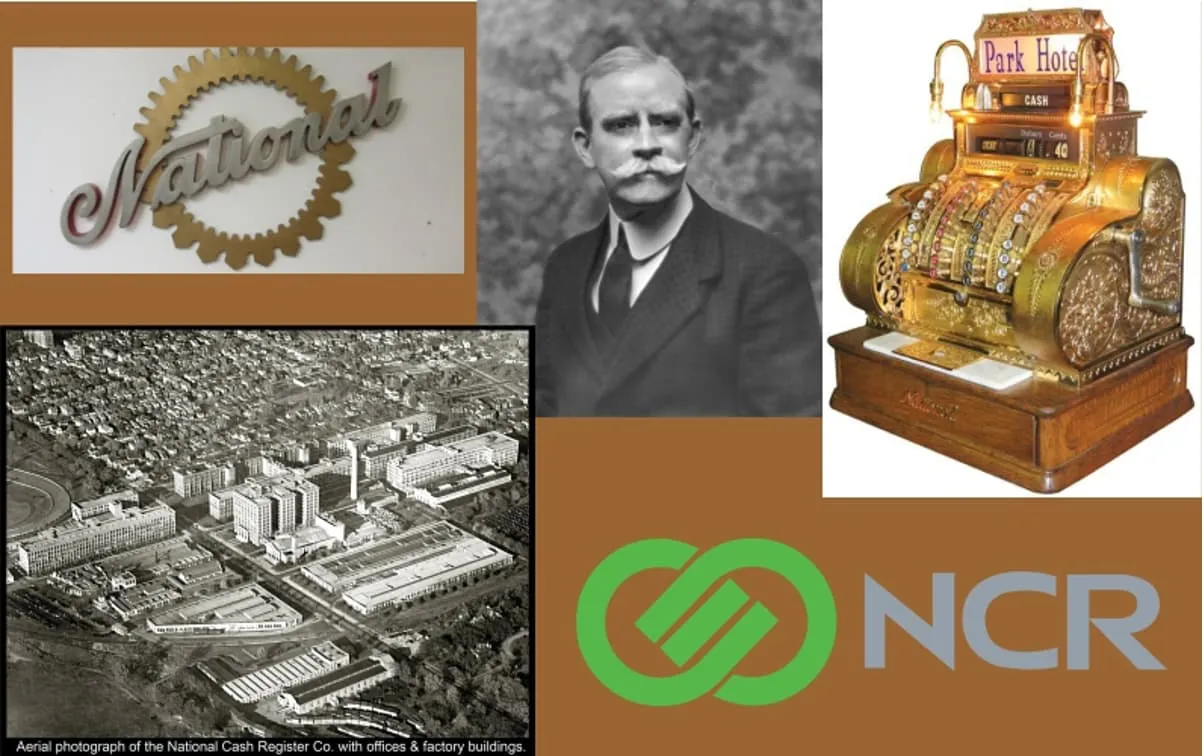
At The Cash, Kettering learned that no matter what theories said, the product must work: his ideas must be truly useful. He took the sales training courses and hung out with the salesmen more than with executives or his fellow engineers. The sales gang “had some real notion of what people really wanted.” As he later said, he learned that “the dollar sign was the most significant variable in any engineering equation.”
Kettering, working for Deeds, successfully developed a small electric motor and unique clutch that fit inside the cash register and ended the cranking, a huge success for the company. Working with top salesman Richard Grant, he developed a new system for department store clerks to confirm a customer’s credit authorization faster and easier.
Beyond that, Kettering envisioned a complete retail accounting system that would enable a store owner to know the day’s profits within 20 minutes after the store closed. It took another six decades before technology allowed such a vision to become real, but Kettering was always thinking about integrated systems, not just the parts. His ideas allowed The Cash to expand into accounting and banking automation and information systems, a market segment in which the company became one of two major manufacturers.
Kettering also brought structure to the research, focusing as much on finding the right questions as on finding the right answers. At the same time, he stayed away from the desk and spent his long hours at the workbench. Even with his remarkable success, he always considered himself “a screwdriver and pliers man” and kept a set of tools handy.
Charles “bubbled over with ideas and energy,” starting at 6:30 in the morning and working late into the night. He became head of the engineering department by 1909, earning $4,200 a year (about $155,000 in 2026) at the age of 33.
DELCO
Kettering’s friend and boss Edward Deeds urged him to look into automotive technology. Kettering borrowed $1,500 from his wife’s savings and began experimenting. A challenge in early cars was how best to ignite the engine and light the autos. Using his electrical knowledge, Kettering developed a battery ignition system. He and some friends from The Cash worked on the idea in Deeds’ barn.
Kettering showed the system to Henry Leland, founder and chief of Cadillac. After a brief trial, Leland ordered 8,000 sets. Deeds and Kettering were shocked. They had no factory. The two men then rushed to the bank, borrowed $150,000 and found a contractor to produce the systems. Upon arrival at Cadillac, the first system had problems. Kettering dashed to Detroit to figure it out. In his train berth heading back to Dayton that night, he could not sleep and kept studying the shape of the wire ends. He figured it out and got the system working as intended.
Realizing the opportunity, Deeds and Kettering incorporated a new company. After debating names, they picked Dayton Engineering Laboratories Company, in part because the initials spelled out DELCO, reminiscent of the powerhouse consumer company Nabisco. They received a patent on their devices on September 15, 1909. Three days later, Kettering quit The Cash. He was Vice President of the new company, and Deeds was President. Without planning on it, Charles Kettering had become an entrepreneur and business co-owner.
Charles was a salesman, ever promoting his ideas and inventions to anyone who would listen. (He later told a close associate that all he really was, “was a salesman.”) He promoted tirelessly, wrote his own advertisements, and put his systems into race cars to demonstrate their effectiveness. He spent so much time at work that the Dayton City Directory listed his address as Deeds’ barn. Within a couple of years, his system was standard equipment on a half dozen car brands.
Because of the difficulty that came with cranking early automotive engines, most women either could not do it or were afraid to do it—making “automobiling” a largely male pastime. In 1910, Henry Leland’s friend Byron Carter was injured when the crank kicked back and died from complications from the injury. Leland insisted there had to be a better way. Spring systems, acetylene gas, and compressed air had all been tried without lasting success. Leland turned to DELCO, where Kettering and Deeds were experts in small electric motors from their experience at The Cash.
In his normal style of thinking, Kettering did not see a single problem; he conceived of an integrated electrical system for starting, lighting, and ignition. Figuring out how to reduce the size of the required components, he initially developed an electric starter. The first starter system was sent to Henry Leland in February 1911. That autumn, Leland ordered 12,000 sets for his Cadillacs.
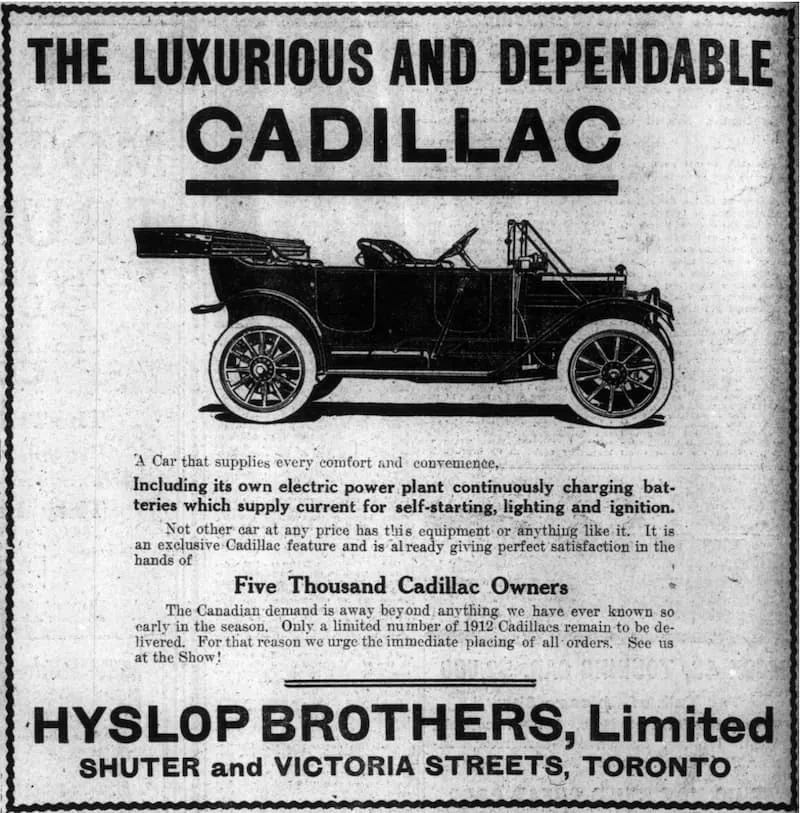
Again, Deeds and Kettering needed to manufacture them, but no contractor would take on the risk of such a big contract on a new product, so the men borrowed more money and built their own plant in Dayton. Within a year, they had 1,200 workers, and by the spring of 1913, they were manufacturing 600 electric starters per day.
By 1915, DELCO had a new seven-story plant, controlled 25% of the market for automotive starting and lighting systems, and made a profit of $1.5 million. Thirty-nine-year-old Kettering was a rich man.
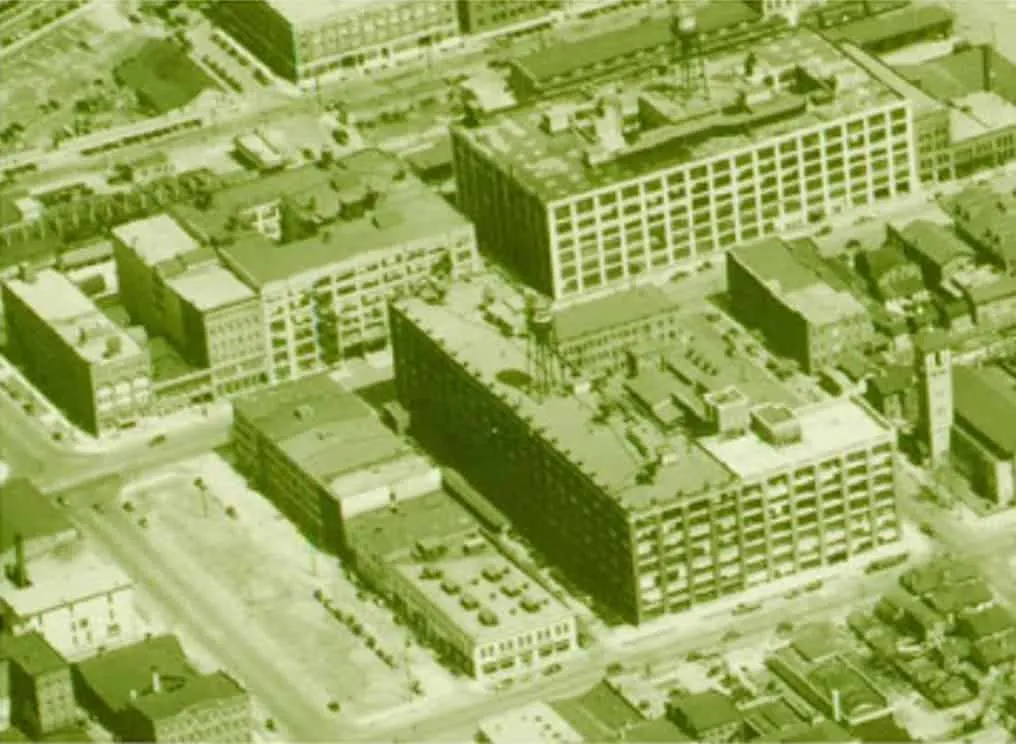
The DELCO Factories in Dayton
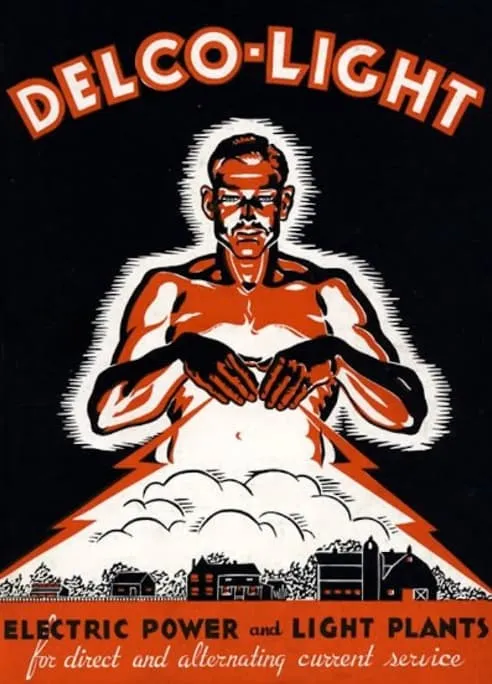
His quest for solutions to problems was unabated. Coming from his background on the farm, he knew that farmers needed electricity, but the city systems being built did not reach them. He invented the gasoline-powered, portable “Delco-Light” product to provide power and light for farmers. Kettering hired Richard Grant, his salesman friend from The Cash, to sell it, and within a few years, they were selling 60,000 units a year and employed over 2,000 people. (Grant stayed with Kettering and rose to become head of sales at General Motors and an important factor in the company’s rise to surpass Ford.)
Enter Billy Durant
William Crapo “Billy” Durant was one of the great wheeler-dealers in American business history and one of the most important figures in the creation of the auto industry. A successful buggy and cart maker from Flint, Michigan, he left that industry and took over the struggling Buick company in the same city. He made it a success, a top-selling car, larger than even Ford before Henry Ford introduced the Model T.
In 1908, the same year the Model T came out, Durant formed General Motors with hopes of rivaling Ford. Durant acquired several automakers, including pioneers Oldsmobile and Cadillac. He paid high prices for some but usually paid in GM stock rather than cash. He even had a handshake deal to buy out Henry Ford, but Ford wanted all cash and Durant’s bankers would not loan Billy the funds required.
While Durant’s enthusiasm for the future of the industry was valid, his wheeling and dealing came back to haunt him, and he was a terrible administrator and manager. In 1910, the bankers took over the company, and he lost his power. Undaunted, Durant formed another company, Chevrolet, which was a great success and bought GM stock with its profits. By 1916, he was back in the GM boardroom, literally “in the driver’s seat.” The ownership of GM by Chevrolet was reversed, and Chevy became part of GM.
Durant knew from his cart business that he wanted control of key suppliers in order to ensure quality and a reliable flow of critical components. By early 1915, he was negotiating with several key parts companies to buy and consolidate them into a new company, United Motors, with the goal of eventually making it part of GM. At the same time, those same suppliers, especially the Hyatt Roller Bearing Company run by Alfred P. Sloan, Jr., a graduate of MIT with an engineering degree, realized they were in a tenuous position. Each was largely dependent on either Ford or GM as a customer, and those industry leaders could start making their own parts, essentially demolishing the smaller companies’ businesses. Thus, Durant’s attractive offers fell on open ears.
Among those ears were those of Edward Deeds and Charles Kettering. Deeds had many other interests, like eventually returning to The Cash to run it after Patterson’s death. Kettering was far more interested in testing ideas in the laboratory than running a company. In May of 1916, they sold DELCO to United Motors for 30,000 shares of United Motors and $5 million in cash, divided equally between the two men. Kettering’s $2.5 million share of the cash is equivalent to $75 million in 2026, but it was the United Motors stock that would propel him to even higher levels of wealth. He was 40 years old.
DELCO was joined in United Motors with Sloan’s Hyatt Roller Bearing Company, the Perlman Rim Company, Remy Electric (a DELCO competitor), and New Departure Bearings. All reported to the very smart engineer-businessman Alfred Sloan. Sloan and Kettering would end up working together to build the largest company in the world over the next 30 years.
While all this was going on, Kettering’s mind could not sit still. During World War I, he believed that airplanes could be made using the same mass assembly system as cars. He, Deeds, and fellow Daytonian Orville Wright of Wright brothers’ fame formed the Dayton Wright Airplane company, which received multiple government contracts. They built a large factory, but Kettering was wrong on this one. Airplanes could not be made the same way as automobiles. Although the assembly system failed, airplane engines were more akin to building cars, and the company found success making ignition systems for the engines.
Kettering did have limited success making a self-guided aerial torpedo with a 15-foot wingspan, nicknamed the Kettering bug, forerunner of today’s drones.
General Motors
On December 31, 1918, Durant had GM buy the two-year-old United Motors, with Deeds and Kettering each receiving GM securities for their United Motors stock. At the stock market peak before the 1929 stock market crash, their GM stock was worth over $3 million each, making them among the nation’s wealthiest men.
But by 1920, Durant had again gotten himself in trouble by borrowing too much against his own GM shares and was kicked out of the company permanently. In the interim, the DuPont chemical company had made large investments in GM, and Pierre S. DuPont took effective control of the company, bringing talented DuPont finance people into the picture to set the ship aright.
In 1919, Alfred Sloan, heading up the parts operations including DELCO, had devised an organizational plan for the whole company. DuPont liked the plan and over the next three years Sloan rose to the presidency of General Motors. Sloan, whose biography is in our American Originals series, was perhaps the greatest business leader in American history. He led the company to become the largest in the world for decades.
Sloan thought that GM needed a central research laboratory, serving all the company’s many divisions. At the time, any “R&D” (research and development) done in the industry meant thinking ahead one year, two at most. Sloan wanted to do more fundamental research and look out further. He wanted to forecast the problems the industry would run into five and 10 years into the future and how the company could make better autos. Sloan desired a long-term technical strategy for the whole corporation. And he knew the man for the job, the fellow engineer he most respected—Boss Kettering.
This was a dream job for Charles. However, Kettering was stubborn, saying he would only take on the task if the lab stayed in Dayton near his beautiful home and estate. Sloan, usually very disciplined, nevertheless agreed. He also gave Kettering a very free hand and few budget limitations, knowing Kettering was an inventor, not a manager.
In 1920, Kettering sold his other Dayton ventures to GM for more stock and was named Vice President for Research at the company and Director of the General Motors Research Corporation, a position he held for the next 27 years, until his retirement in 1947.
Especially in the early days, Kettering’s success had bumps in the road. He and Pierre DuPont were enthusiastic about his idea for an air-cooled engine, which used copper fins for cooling and was named the Copper-cooled engine. Sloan was skeptical but let the project proceed. Kettering believed it could make their least expensive cars more competitive with the Model T. The chiefs of the car-making divisions and their manufacturing engineers felt left out of the process. Their tests of the new engine did not go well. One division manager even had a “nervous breakdown” due to the infighting. Kettering thought they should be fired. He considered quitting the company to make the engine on his own, easy to do for the independently wealthy man.
This ended up being a major boardroom fight and cost the company millions. Despite his real-world education at The Cash, Kettering had not fully taken into account the difference between a prototype and setting up a factory to make it. In 1923, Sloan shut the program down and successfully convinced Kettering to stay with GM. To avoid such fracases in the future, Sloan set up a special committee consisting of people from Kettering’s labs and from the operating divisions (including marketing) to ensure smoother communication and idea sharing going forward.
During all these years, Kettering spent hours on trains between Dayton and Detroit or driving (too fast) back and forth, so in 1925 Sloan moved the labs from Dayton to Detroit. Kettering established a second home in a suite at the luxurious Book-Cadillac hotel in downtown Detroit. GM built a new 11-story building where Kettering had an office but spent little time. He was too busy poking around the laboratories. He had 260 scientists and researchers working for him at the beginning, and 500 by 1940.
While Sloan and Kettering had plenty of differences over the years, the success of the company was their shared goal. Sloan, known for his formality, referred to Kettering as “Mr. Kettering” his entire life. Kettering was known for his informality. Sloan was always impeccably dressed; Kettering was considered the worst-dressed executive in the company. To call them friends seems too strong. But the mutual respect survived and continued into their shared major philanthropic project, the Sloan Kettering Cancer Research Institute, to which Sloan contributed funds and Kettering provided the scientific guidance.
DELCO itself was merged with sister division Remy Electric of Anderson, Indiana, and division headquarters moved there in 1926, becoming Delco-Remy. This move was led by former Westinghouse engineer Charles E. Wilson, “Engine Charlie.” Wilson ran the division and later went on to become the president of General Motors and then Secretary of Defense for President Eisenhower. Anderson, this writer’s hometown, then became the largest concentration of GM employees outside of Michigan, peaking at about 25,000 workers in a city of 60,000, before falling to zero in the late twentieth century.
Kettering’s Contributions to Technology
It has been said that Charles Kettering “contributed more to the technical development of the automobile than any other American engineer.” The electric starter alone gave Americans, especially women, mobility and independence.
A big challenge to the early industry was the painting and finishing of auto exteriors. We often forget that the automobile is a self-contained environment with heating, cooling, electrical systems, and much else, all on wheels, and intended to work from freezing temperatures to desert heat. One top GM executive said that having a bad paint job would hurt their reputation more than a bad engine. Yet finishing cars required up to three weeks of hand polishing. Coming off Ford’s production line, acres were covered with drying cars. Luckily, there was a black paint that dried faster, which is why Model Ts only came in black.
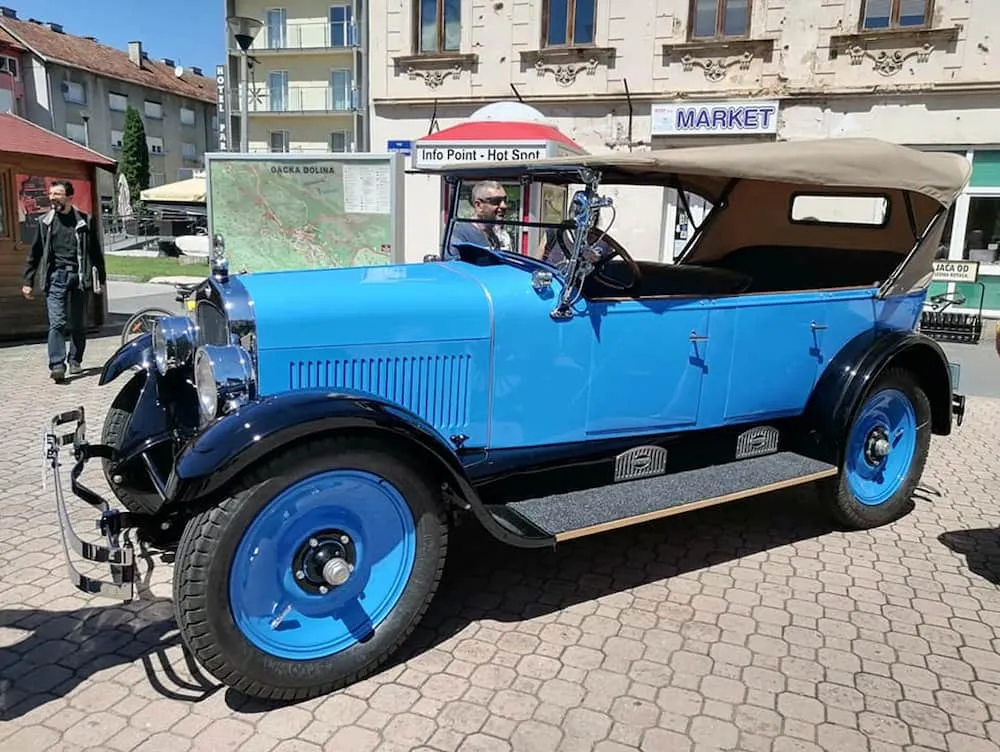
Alfred Sloan’s competitive strategy, when Ford was selling millions more cars than GM, was to develop autos that were much better and more attractive for a little more money, to offer models with extra features. As he said, “A car for every purse and purpose.” In tune with that, GM leaders thought colored cars would be a big help. Working with chemists at DuPont, Kettering and his “boys” figured it out, creating Duco fast-drying color paint. At first, the only color they could get to work was a light blue, not considered very attractive. The company tested it on their weakest brand, the Oakland, figuring there was little to lose if the idea failed. Yet the idea was so unique that people waited in line to buy “True Blue” Oaklands. (Oakland was later renamed Pontiac.)
Kettering had an intense interest in fuel economy throughout his career, long before consumers and the government began to focus on the issue. It was not until after World War II that consumers placed power and speed above fuel efficiency, leading to horsepower wars between manufacturers, starting with the introduction of high-compression V-8 engines in the 1949 Oldsmobiles and Cadillacs.
Adding to Kettering’s concerns, in 1920 Americans were using four billion gallons of gasoline annually, growing at 20% per year. He did a study and concluded that the United States was producing more petroleum than it would at any time in the future, a conclusion shared by the US Geological Survey and the American Institute of Petroleum Geologists. (Those findings do not speak well for the ability of experts to forecast the future.)
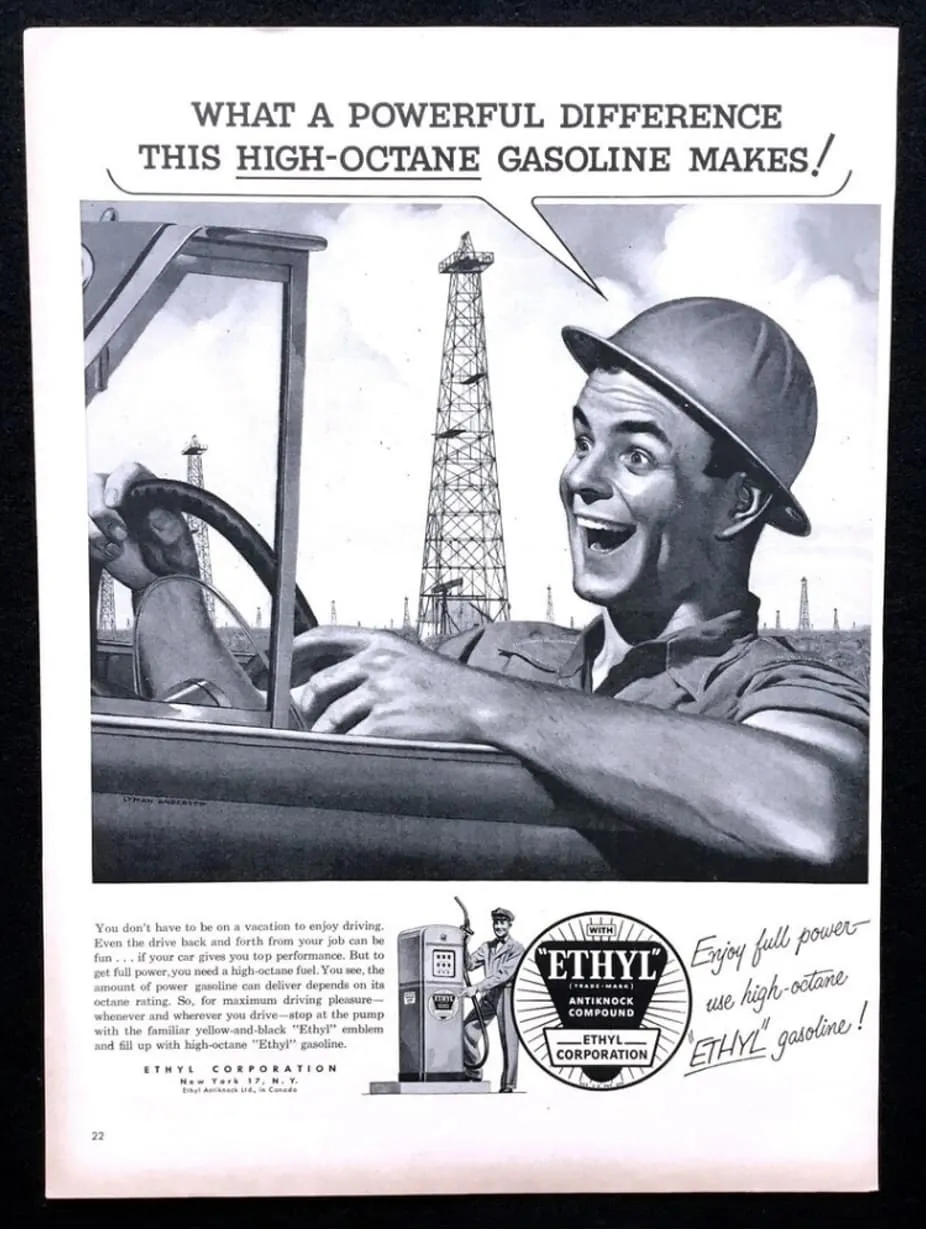
Charles knew that the best way to improve fuel economy was by using high compression engines, but when regular gasoline was used in them, they developed a loud knocking that could crack the pistons. No one knew why “knocks” happened, but most thought it was a problem with the engine. Kettering thought it was the fuel that caused the problem and set his mind and boys to work on it. When experiment after experiment failed, he called his chemists into a meeting and told them to figure it out within six months, or they would all be fired.
They finally found that adding a chemical called tetraethyllead to the fuel could eliminate the knock. Lead poisoning is very dangerous, and one of his workers died and others became sick from handling it, but Kettering believed those dangers could be controlled in a well-run blending plant that added the chemical to gasoline. Chemical companies and their employees work with highly toxic chemicals every day, so it seemed a safe bet. Kettering coined the term “Ethyl” for the new gasoline. He and his team also developed the octane rating system for fuel performance.
To do the blending, GM set up a joint venture with Standard Oil of New Jersey (later renamed Exxon), the Ethyl Corporation, which proved a big success and a large money maker for both companies. Only decades later did advances in technology and testing reveal the dangers of leaded gasoline to the public and the environment, and it became prohibited. General Motors researchers then also figured out how to make unleaded gasoline as effective as Ethyl, though it ironically cost more to produce.
Another area of Kettering’s interest was the diesel engine, which could work at higher compressions and used less expensive fuel (at the time). On the other hand, diesel engines were heavy and slow. At his urging, GM bought two small companies with diesel engine experience. Through continuing experimentation, Kettering and the boys achieved a dramatic decrease in the weight per horsepower. By the 1930s, his two-stroke diesel engine had revolutionized power in ships, trucks, and locomotives.
General Motors put all its muscles to work promoting its diesel-electric locomotives: standardized, common parts; long-term financing (like GMAC); factory-trained maintenance men; and skilled advertising. Kettering’s son Gene was a key engineer and executive in this process and in GM’s locomotive division. Starting with no market share in locomotives, GM went on to dominate their manufacture for at least 30 years, while the old makers of steam locomotives were unable to successfully compete and perished. The famous Burlington Zephyr, on display at Chicago’s Griffin Museum of Science and Industry, was one of GM’s first and most beautiful successes. Later passenger diesels carried colorful paint schemes like the “Warbonnet” worn by Santa Fe engines.

Yet another discovery by Kettering and his men, working with DuPont, was the refrigerant Freon, which made for much safer refrigeration systems, including at GM’s Frigidaire division, an industry leader. Like leaded gasoline, by 1980 Freon proved to have unforeseen environmental issues, depleting the ozone layer. Innovation in almost every field carries risks, and those risks are evaluated with the knowledge available at the time.
The innovations we’ve discussed are the best-known of Kettering’s contributions, but his research organization, often working from his own ideas, made thousands of small changes to every aspect of General Motors’ products. Many were later adopted by other automakers worldwide.
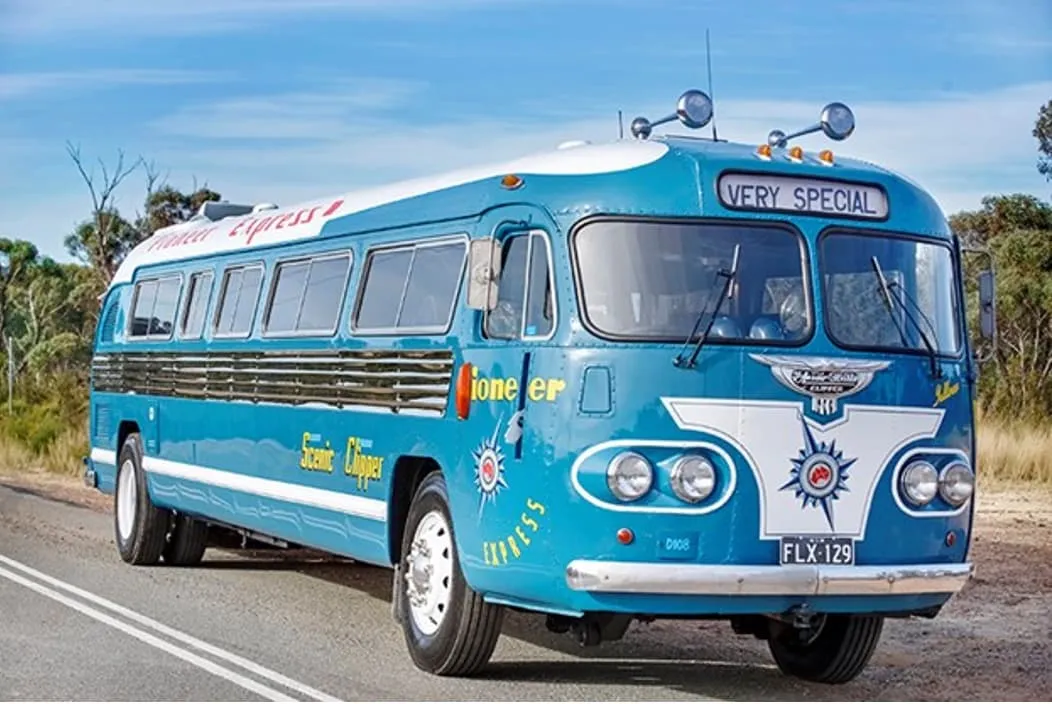
In perhaps one of the oddest stories in business history, Kettering also owned a competitor to General Motors. He bought control of a small company that first made flexible sidecars for motorcycles called Flxible, and later made intercity buses, where GM was the dominant manufacturer. The idea was to put the factory in his hometown of Loudonville and see if he could make a successful small company, creating jobs and supporting the small town. It worked: Flxible sold many buses, often with GM engines. History is not clear as to why GM tolerated this unusual situation.
Even after his retirement in 1947, he continued to be a valued consultant to the company.
Kettering’s Approach to the World
Like all the men and women we study in the American Originals series, Kettering was not your typical thinker. So, what made him different? What can we learn from Kettering and his patterns of thought?
Kettering was an engineer, inventor, and a teacher. But he was also, admittedly, a salesman. Not just selling inventions and products but selling ideas and ways of thinking. He made a great number of speeches and wrote many articles for national publications. His quotable sayings, dry wit, and folksy, colorful style endeared him to audiences.
Kettering was a true iconoclast, an independent thinker, always ready to challenge orthodoxy, always dissatisfied with the world around him. He loved to test the thinking of those he worked with. In one famous story in the DELCO years, he took a group of his bright young engineers for a ride in a car that kept stalling. The task was to figure out the cause. Every time the engine died, Charles would get out of the car, walk around the wheels, and tighten the wheel nuts. Then the car would start again. It took a few times before the young men realized the joke—Kettering knew the engine was overheating and would start when allowed to cool for a few minutes. How long would it take those bright youngsters to see around the distraction of the wheel nuts to discover the real cause?
Kettering loved finding problems. To him, challenges were opportunities. He said, “The price of progress is trouble, and I don’t think that price is too high.” He believed “Industries are like some watches, they have to be shaken hard every so often to keep them going.” Kettering viewed his operation as a “Corporate Insurance Policy,” the way to see future problems before anyone else, to start working on their solutions early. He said it was “a way of finding out what you are going to do when you can no longer do what you are doing now.”
Charles Kettering was a broad thinker, a generalist who could knit together a variety of disciplines into whole cloth. He hated overspecialization, especially in academia, and said he wanted to get people “out of their narrow worlds.” He pointed out that the problem was not a specialist, the problem did not care what degree you had. He made his physicists look at chemistry problems and his chemists look at physics problems. Kettering advocated “untutored ingenuity” and went so far as to say, “You can’t do a job with educated people. They want to do it the way they were educated.”
Kettering believed in basic “first” principles and asking the right questions. In directing one of the largest corporate research organizations in the world, he viewed his task as selection of the right problems. A plaque on his office wall read, “Any problem, thoroughly understood, is fairly simple.” In the midst of a meeting with highly educated chemists, Kettering might ask them a seemingly stupid question, like “What is a catalyst?” Taking them back to freshman chemistry, he wanted to make sure they really thought through what such fundamental ideas really meant.
He was a browser, a grazer, looking for answers and information from any source. He stayed close to the ground, talked to everyone, and lived near the workbench. Kettering borrowed many ideas, like four-wheel brakes, from visiting European automakers. He learned about the advantages of balloon tires from talking to the people at Goodyear and better bearing materials from friends at the General Electric laboratories. His people took these ideas and made them better. Kettering read every journal and publication. He read the letters from customers, from ordinary people. Receiving dozens of suggestions from individual inventors in his daily mail, he read them. Many were crazy, but a few were not, so he set up a special “New Devices” committee to review every idea that “came in over the transom.” Several GM innovations resulted.
Charles Kettering was impatient, a “man in a hurry” all his life. When driving from Dayton to Detroit, he always arrived much sooner than the younger men who drove the same route on the same day. When asked about it, he said you never get anywhere going the same way as everyone else—he had taken back roads and avoided the small towns and stoplights, undoubtedly breaking the speed limit. He rarely took the elevator up to his office in Detroit; it was just too slow for him.
Kettering Beyond General Motors
Charles F. Kettering lived another 11 years after retirement, dying November 25, 1958, at the age of 82. He was still generating patents and doing experiments right up to his death.
Both during his life and afterwards, he supported causes he believed in. Despite his complaints about the education system being too specialized and disconnected from solving real, practical problems, he provided funding to the progressive Moraine Park school in Dayton and gave Antioch College a library, student union, and science building. He also supported other educational programs, especially those which combined theory with practical knowledge and training, often bringing business and education together.
In his retirement years, Kettering funded several private research laboratories, studying everything from solar power and photosynthesis to magnetism. And of course, his “joint venture” with Alfred Sloan, Sloan-Kettering.
Charles F. Kettering was truly an Original American.
Sources: This story is based on the excellent biographical work on Kettering by Stuart Leslie, combined with many other sources.
Gary Hoover is a business history fellow at the Archbridge Institute and lead author of the institute’s popular “American Originals" series. He is the rare combination of a business scholar and practitioner. He has a bachelor’s degree in economics from the University of Chicago, where he studied under four Nobel laureates. He has served as an Entrepreneur-in-Residence at the University of Texas in Austin and the University of Texas at Austin, and he is a fellow of the IC2 Institute. He speaks to conferences and corporate groups and works to encourage innovation and entrepreneurial thinking on every continent and in every industry, for-profit and not-for-profit.
Share:
Related Posts


Related Posts
None found